

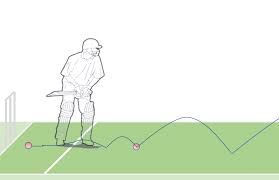
Cricket’s regulatory framework contains dozens of technical terms that shape match outcomes without appearing in a scorecard or statistical summary. The dead ball sits at the centre of this invisible architecture — a defined condition suspending all scoring, dismissals, and penalties until play legitimately resumes. Knowing what is dead ball in cricket separates surface-level match understanding from genuine engagement with the Laws that govern every delivery bowled at professional level. Ball-by-ball data, match incident records, and live cricket coverage across Test, ODI, and T20 formats are tracked across dedicated sports platforms — a quality betting app covers live cricket alongside detailed match event logging where dead ball rulings affect official scoring records in real time.
Dead ball in cricket is the condition in which the ball ceases to be in active play — no runs accumulate, no dismissals are valid, and no fielding actions carry official consequence. The MCC Laws of the Game, specifically Law 20, define the dead ball through two distinct mechanisms: situations where the ball becomes dead automatically without any umpire intervention, and situations where an umpire must actively call and signal dead ball to bring the condition into effect. The difference between these two mechanisms determines the precise moment from which the dead ball status applies and which consequences of play are preserved and which are nullified.
Why the Dead Ball Concept Exists
Cricket’s continuous play structure — where a delivery’s consequences extend through running, fielding, and potential dismissal attempts before the action naturally concludes — requires a clearly defined endpoint. Without the dead ball concept, the Laws would lack a mechanism for distinguishing the end of one delivery’s legitimate consequences from the beginning of the next.
The dead ball also serves as cricket’s primary tool for neutralising illegitimate advantage. When a fielding team commits an infringement that would unfairly affect the outcome of a delivery — deliberate distraction of the batter, obstruction of a runner, or positioning equipment in the ball’s path — the dead ball call prevents the infringement from producing a result while simultaneously triggering the appropriate penalty.
At the umpiring level, the dead ball authority grants the on-field officials the power to suspend play immediately when safety, fairness, or extraordinary circumstances require intervention. This authority is not constrained to specific enumerated situations — Law 20 provides both a defined list and a general discretionary provision allowing umpires to call dead ball in any situation where the spirit of the game demands it.
Automatic Dead Ball: When No Call Is Required
The ball becomes dead automatically — without any umpire call — in a defined set of circumstances where the delivery’s natural action has conclusively ended.
Ball settling with the wicketkeeper or bowler represents the most frequent automatic dead ball situation in any match. When neither batter is attempting a run and the ball comes to rest in the wicketkeeper’s gloves or the bowler’s hands at the non-striker’s end, the delivery has reached its natural conclusion. No call is required — the dead ball condition is self-evident.
Ball reaching the boundary terminates the delivery the moment the ball crosses or touches the boundary rope. Four runs are awarded for a ball reaching the boundary along the ground; six runs for a ball clearing the boundary on the full without bouncing. Once the boundary is reached, fielding interception carries no consequence — the dead ball condition is immediate.
Dismissal of a batter triggers automatic dead ball at the moment the dismissal is completed. Runs scored before the wicket fell are counted; no further runs from that delivery accumulate. The dismissal itself is the terminating event.
Ball lodging in protective equipment — specifically a helmet placed on the ground by the fielding side — triggers automatic dead ball with a five-run penalty awarded to the batting team. This provision covers balls rolling into or becoming trapped in any part of the grounded protective equipment.
Umpire-Called Dead Ball: Intervention Situations
| Triggering Situation | Calling Umpire | Runs Scored? | Dismissal Valid? |
| Batter not ready, no stroke attempted | Bowler’s end umpire | No | No |
| Deliberate fielder distraction of batter | Either umpire | No | No + 5 penalty runs |
| Ball not released by bowler | Bowler’s end umpire | No | No |
| Player injury requiring immediate attention | Either umpire | No — position preserved | No |
| External object enters field | Either umpire | No | No |
| Batter’s helmet dislodges onto stumps | Leg umpire / square leg | No | No |
| Umpire loses sight of ball entirely | Either umpire | Completed runs count | No |
| Lightning or weather emergency | Either umpire | No | No |
| Crowd encroachment affecting play | Either umpire | No | No |
The umpire-called dead ball situations share a common logic: something external to the legitimate contest between bat and ball has intervened, making the continuation of the delivery’s consequences inequitable or unsafe. The umpire’s call freezes the position — runs completed before the intervention are preserved, those in progress at the moment of the call are not awarded unless both umpires determine the runs would have been completed regardless.
Dead Ball Timing and the Sequencing Problem
The most technically demanding aspect of dead ball law involves situations where multiple events occur nearly simultaneously — a dismissal attempt and a dead ball condition arising within fractions of a second of each other. Determining which event occurred first — and therefore which legal consequences apply — is among the most difficult judgement calls in on-field officiating.
The run-out and dead ball interaction presents the clearest version of this problem. If a fielder dislodges the bails to complete a run-out at precisely the moment the ball would naturally have settled in the wicketkeeper’s hands, umpires must determine whether the run-out was completed before the automatic dead ball condition arose. Modern technology — specifically ball-tracking and frame-rate analysis at high-definition camera angles — has made this determination more precise in international competition, but the judgement remains inherently time-sensitive.
The catch and boundary interaction produces similar complexity. If a fielder catches the ball near the boundary and the momentum carries both fielder and ball over the boundary rope, the Laws specify a particular sequence: if the fielder completes the catch before grounding over the boundary, the batter is dismissed; if the fielder grounds over the boundary before completing the catch, a six is awarded and the batter is not dismissed. The dead ball arises at the boundary in the six scenario, nullifying the subsequent catch.
Dead Ball Penalties: Five-Run Awards
Several dead ball situations do not merely suspend play but actively transfer runs to the batting side through penalty provisions. These penalty dead balls represent the most consequential category for scorecard impact.
| Infringement | Penalty Runs | Ball Status After |
| Ball lodges in grounded fielder’s helmet | 5 to batting side | Dead ball — delivery does not re-bowl |
| Ball lodges in grounded wicketkeeper’s helmet | 5 to batting side | Dead ball — delivery does not re-bowl |
| Deliberate fielder distraction of batter | 5 to batting side | Dead ball — delivery does not re-bowl |
| Fielder deliberately causes dead ball | 5 to batting side | Dead ball — delivery does not re-bowl |
| Fielding side’s protective gear on field illegally | 5 to batting side | Dead ball — delivery does not re-bowl |
The five-run penalty structure serves a deterrence function as much as a compensatory one. By assigning a meaningful scoring consequence to specific fielding infractions — rather than simply replaying the delivery — the Laws create a clear incentive for fielding teams to comply with equipment placement rules and fielding conduct standards. The penalty runs are added to the batting team’s total and attributed to extras, not to any individual batter’s score.
Dead Ball in T20 Cricket: Heightened Consequences
The dead ball concept carries amplified significance in T20 cricket, where individual deliveries have a disproportionate influence on match outcomes relative to longer formats. A five-run penalty dead ball in the 19th over of a T20 match can represent the effective margin of victory; in a Test match, the same five runs carry negligible statistical weight across 600 or more deliveries per innings.
Free hit deliveries and dead ball interact through specific provisions governing what happens when a dead ball is called on a free hit delivery. The free hit — awarded after a no-ball in limited-overs cricket — is not consumed if the delivery on which it was to be bowled becomes dead before legitimate completion. The free hit carry-forward provisions mean that a dead ball on what would have been a free hit simply delays the free hit to the next legitimate delivery.
Strategic time-wasting and dead ball has become a more prominent concern in T20 cricket as teams have developed increasingly sophisticated methods for disrupting the batting side’s momentum through slow over rates, deliberate delays in the run-up phase, and other tactics that extend the time between deliveries. Umpires retain dead ball authority in these situations but typically apply it as a last resort after warnings — the primary enforcement mechanism for over rate violations operates through penalty runs assessed at the match’s end rather than ball-by-ball dead ball calls.
Power play interactions with dead ball produce specific considerations around fielding restriction enforcement. When a dead ball is called during a power play delivery, the power play restrictions remain in force for the re-bowled delivery — the dead ball does not advance the power play count. An umpire error in calling dead ball incorrectly during a power play situation could therefore produce a material tactical consequence by extending the fielding restriction period.
What Happens After a Dead Ball Is Called
Once a dead ball condition exists — whether through automatic operation or umpire call — play resumes through a specific sequence. The umpires confirm the scoring position to be preserved, communicate any penalty awards to the scoring officials, and signal to the fielding side that the next delivery can commence when both batters are in position and ready.
For umpire-called dead balls involving player injury, the resumption sequence includes confirmation that the injured player is either fit to continue or has been replaced under the appropriate substitution provision. International cricket’s concussion substitute protocol creates a specific dead ball resumption pathway where the replacement player’s eligibility and position must be confirmed by the third umpire before play resumes.
For dead balls involving external interference — pitch invasions, objects on the field, equipment failures — the resumption requires confirmation that the playing surface and field of play meet the standards required for safe continuation. The umpires retain authority to delay resumption until they are satisfied with the conditions.
Dead ball in cricket ultimately represents the sport’s answer to an inherent challenge in continuous-play sport: defining with legal precision when the consequences of one action end and the conditions for the next begin. The precision of Law 20’s provisions — distinguishing automatic from umpire-called situations, defining the moment of dead ball onset, and specifying which concurrent events are preserved and which are nullified — reflects the depth of regulatory thought embedded in cricket’s Laws and the centuries of accumulated match experience from which those Laws were developed.
