

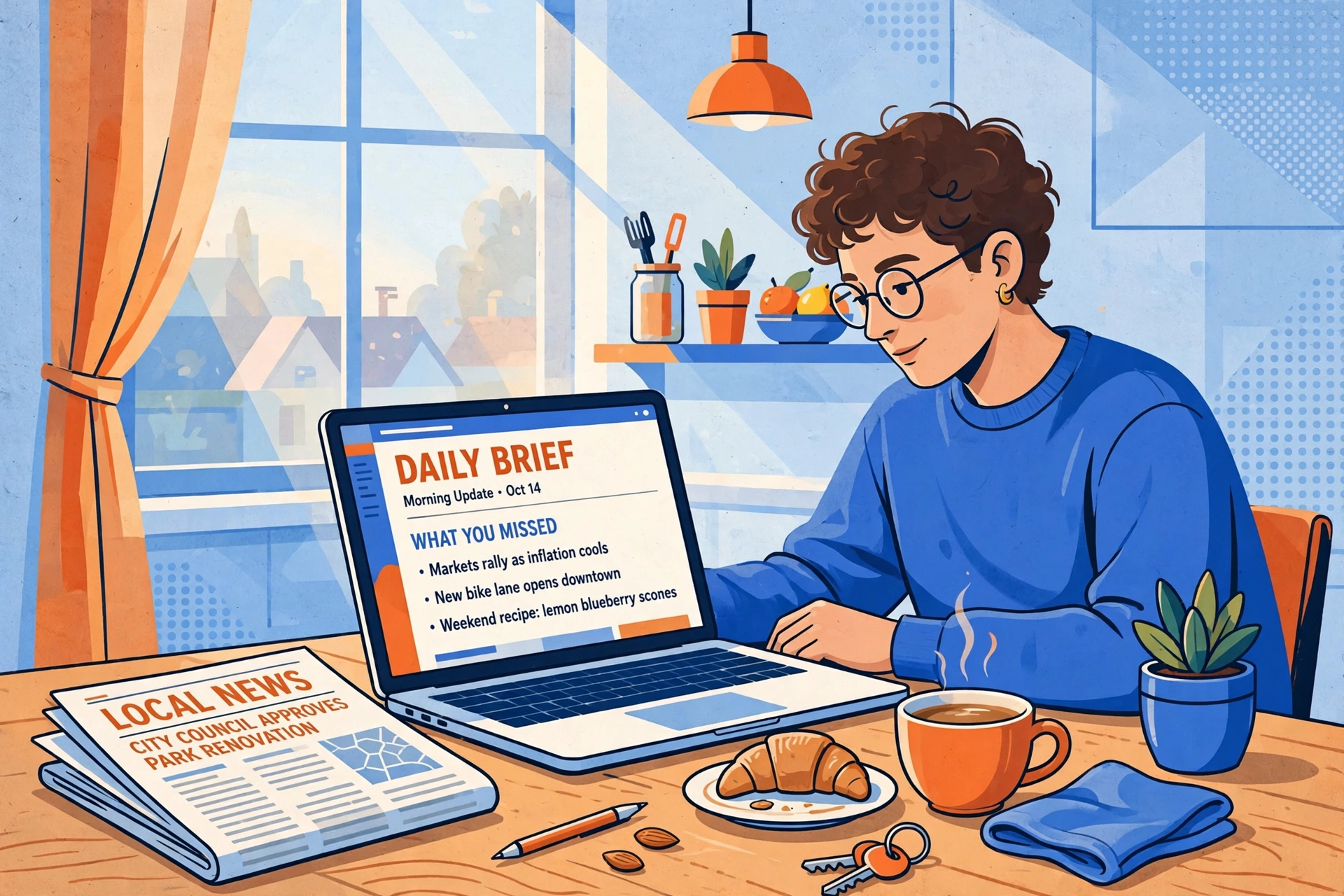
Something unexpected has happened to the way people read the news in 2026: the inbox has beaten the feed. After a decade of headlines arriving through social media timelines and push alerts, millions of readers are deliberately choosing email newsletters as their main source of news — and publishers, independent writers and media startups are racing to meet them there.
The shift is not nostalgia. It is a reaction to how unpredictable social platforms have become. Algorithms change without warning, referral traffic swings wildly, and posts that took hours to produce can vanish from view in minutes. Email, by contrast, is boringly reliable: a newsletter sent is a newsletter delivered, and the relationship belongs to the publisher rather than to a platform.
Why readers are switching
Surveys of news consumers keep pointing to the same motives: control, calm and trust. Readers say they are tired of infinite scrolling and the anxiety that comes with it. A newsletter arrives once, has a beginning and an end, and can be finished — a small but meaningful luxury in an always-on media diet.
Research from the Reuters Institute for the Study of Journalism has repeatedly found that audiences value direct, curated relationships with sources they trust. Newsletters deliver exactly that: a known voice, a predictable format and a selection of stories someone has actually thought about, rather than whatever an engagement algorithm surfaced.
There is also a generational angle. Younger readers who grew up with group chats and private channels are comfortable with media that feels personal. A well-written newsletter reads less like a broadcast and more like a smart friend catching you up — which is precisely why personality-driven titles have grown so quickly.
The business case is getting stronger
For publishers, the economics are increasingly hard to ignore. Subscription newsletters convert loyal readers into paying customers far more effectively than display advertising, and even free newsletters build an owned audience that cannot be taken away by a platform policy change. Advertisers, meanwhile, pay premium rates to reach niche, engaged lists in fields like finance, technology and health.
That is why legacy brands and solo creators now compete in the same inbox. Large news organisations have launched dozens of specialist titles, while individual journalists have built six-figure businesses from a laptop. Data from Pew Research Center underlines how central digital channels have become to news habits, and email sits comfortably inside that shift.
What the boom means for readers
Choice is the obvious benefit — and the obvious risk. With thousands of titles competing for attention, inbox overload is real. The readers who benefit most treat newsletters like a curated diet: two or three trusted titles, read properly, instead of twenty skimmed in a panic. Our own approach on Newsletter Issues is to track which titles genuinely respect readers’ time.
If you are exploring the landscape, start with the topics you care about and sample widely before paying for anything. Our recent coverage of the newsletter industry is a good place to compare formats, prices and publishing rhythms.
The bottom line
Email was declared dead more times than anyone can count, yet in 2026 it is the most stable channel in digital media. The newsletter boom is really a trust boom: readers are paying — with money or attention — for editing, voice and reliability. Publishers who understand that will keep growing long after the next algorithm change buries everyone else.
