

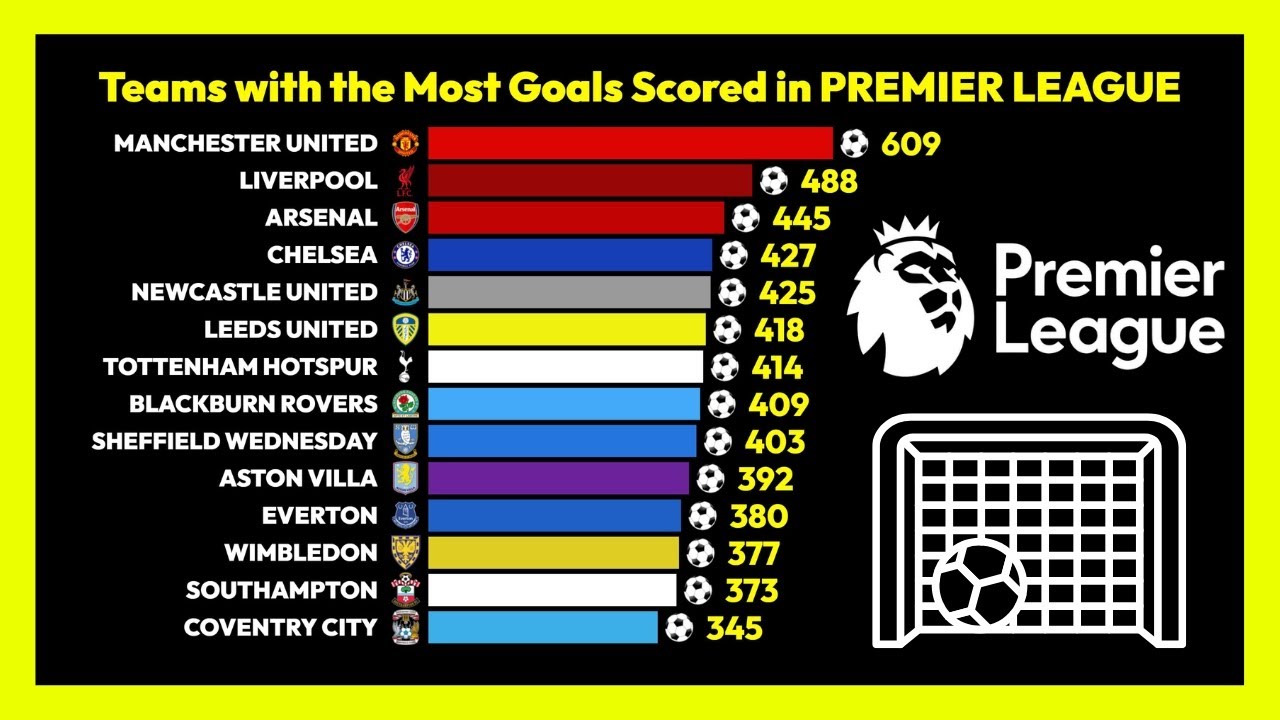
In the Premier League, goal totals often lag behind attacking volume. Some teams consistently generate shots, territory, and expected threat, yet struggle to convert those advantages into goals. This pattern is not a temporary finishing slump. It usually reflects deeper structural issues related to chance quality, shot selection, and decision-making under pressure. Understanding why chance creation fails to translate into goals helps separate misleading dominance from genuine attacking strength.
Why chance volume alone does not guarantee goals
High chance volume increases opportunity, but it does not ensure efficiency. Teams can dominate possession and generate repeated attempts while still producing low-quality shots. The cause lies in how chances are constructed; the outcome appears in conversion rates; the impact is a disconnect between expected performance and results.
When defenders remain set and shooting lanes stay predictable, chance quantity inflates without improving scoring probability. This explains why some teams look dangerous statistically while remaining blunt on the scoreboard.
Structural reasons behind poor conversion rates
Low scoring despite high chance creation often emerges from recurring attacking patterns. These patterns reveal why opportunities fail rather than how many are produced.
Before identifying them, it is important to understand that finishing problems are rarely isolated to individual players. They emerge from team-level design. The explanation below matters because it separates repeatable inefficiency from short-term variance across fixtures.
- Heavy reliance on shots from outside optimal central zones
- Limited off-ball movement before the final action
- Delayed decision-making allowing defenders to set
- Attacks funneled into crowded shooting lanes
Interpreting this list shows that low goal output is usually a structural consequence. Teams that generate many shots without disorganizing defensive blocks repeatedly test goalkeepers from low-probability positions, keeping scorelines suppressed despite apparent pressure.
The difference between expected goals and real threat
Expected goals measure probability, not inevitability. Teams can post high expected goal totals through volume accumulation while still lacking true danger.
The cause is distribution of attempts across many low-value shots; the outcome is inflated xG without clear chances; the impact is misleading optimism. Real threat emerges when chances force goalkeepers into reactive saves rather than routine positioning.
How tempo and patience reduce finishing efficiency
Tempo influences whether defenses reset before shots occur. Teams that circulate the ball slowly often allow defensive lines to regain shape, turning promising situations into blocked or rushed attempts.
This dynamic explains why some possession-heavy teams struggle to score. The cause is overextension of buildup; the outcome is delayed shooting; the impact is declining shot quality despite sustained pressure.
Comparing high-chance low-goal team profiles
To clarify how these patterns manifest, teams can be grouped by attacking profile rather than results. The table below outlines common profiles associated with high chance creation but low goal output.
| Team Profile | Chance Creation Method | Defensive Response | Goal Outcome |
| Volume shooters | Repeated low-quality shots | Set blocking | Low |
| Wide dominance | Cross-heavy attacks | Aerial clearing | Low |
| Slow buildup | Patient circulation | Compact block | Low |
| Transitional creators | Few high-value chances | Late recovery | Medium |
This comparison highlights why not all attacking pressure is equal. Teams relying on volume rather than disorganization generate misleading dominance that rarely converts efficiently.
Identifying these teams through data-driven analysis
From a data-driven betting perspective, identifying teams that create many chances but score few goals requires looking beyond surface metrics. Shot count, possession, and xG must be paired with contextual indicators.
Before outlining key indicators, it is important to understand why raw data misleads. Numbers detached from shot location, pressure, and timing exaggerate attacking competence. The explanation below provides necessary context before actionable metrics are listed.
- High shot count paired with low average shot quality
- Elevated blocked-shot percentage
- Low conversion from central box entries
- Minimal one-touch finishes inside the area
Interpreting this list shows that inefficiency becomes predictable when these indicators cluster. Teams fitting this profile often underperform goal lines while still appearing dominant in pre-match analysis.
Market interpretation of chance-heavy low-scoring teams
When teams repeatedly create chances without scoring, market perception often lags behind structural reality. Odds continue to reflect attacking promise even as inefficiency persists.
Under situational conditions where surface dominance drives expectation, observation leads to implication before reference. During this process, analysts sometimes examine how different betting environments react to these patterns. In that context, UFABET may be reviewed as part of a broader market comparison, not to endorse selections, but to observe whether goal markets still price these teams as efficient scorers despite evidence of structural limitation. This helps identify when narrative-driven confidence outweighs conversion reality.
When this pattern corrects itself
Not all chance-heavy low-scoring teams remain inefficient indefinitely. Tactical adjustments, personnel changes, or tempo shifts can improve conversion.
Conditional scenarios that improve scoring output
Efficiency improves when teams increase central penetration, accelerate decision-making, or introduce finishers better suited to chance profile. These conditional scenarios explain why some teams suddenly outperform expectation without increasing shot volume.
Summary
Premier League teams that create many chances but score few goals do so because of structural inefficiencies rather than bad luck alone. Shot quality, tempo, and decision timing determine whether pressure converts into goals. By analyzing how chances are created rather than how many occur, these teams become easier to evaluate and less misleading in both performance analysis and market interpretation.
